

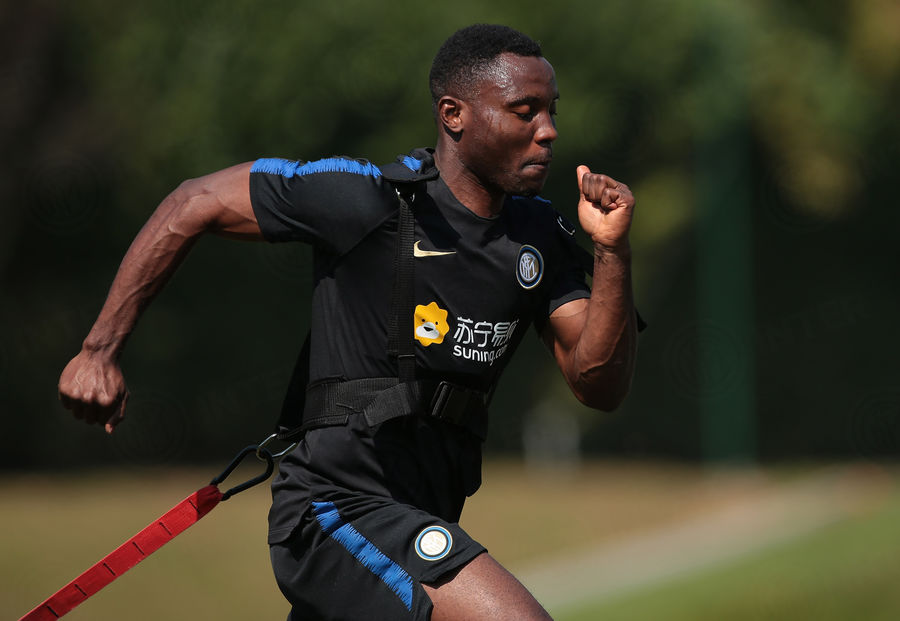
Early Life and Career Beginnings
Born on December 9, 1988, in Accra, Ghana, Kwadwo Asamoah’s journey to football prominence was marked by determination and raw talent. Growing up in a football-loving environment, he developed his skills at Liberty Professionals, a well-respected Ghanaian club known for nurturing talent.
His professional breakthrough came early, and his performances in the Ghana Premier League attracted European scouts. In 2008, Udinese of Italy’s Serie A secured his signature, marking the beginning of his European adventure. At Udinese, he adapted quickly to the tactical rigor of Italian football, learning to balance defense and attack effectively.
The Evolution of the Wing-Back Role
Historically, wing-backs were considered primarily as defensive assets tasked with marking opposition wingers and supporting the back line. However, as football tactics evolved, the role demanded an expanded skill set. Modern wing-backs became pivotal in both defense and offense, acting as auxiliary attackers, midfielders, and defenders, all in one.
Kwadwo Asamoah’s career epitomizes this evolution. His ability to play on both the left and occasionally the right flank, combined with his skill to drop into midfield or push forward into the attack, made him invaluable in tactical systems that rely on fluidity and adaptability.
Key Attributes That Define Asamoah’s Play
Attribute Description
Versatility Comfortable playing as left-back, left wing-back, central midfielder, and even on the right.
Tactical Intelligence Reads the game well, making crucial interceptions and supporting both defense and attack.
Stamina and Work Rate Known for covering large areas of the pitch consistently throughout the game.
Crossing and Passing Delivers precise crosses and smart passes to create scoring opportunities.
Defensive Skills Strong tackling and positional discipline make him reliable defensively.
Composure Maintains calm under pressure, important for controlling tempo and making smart decisions.
Tactical Impact and Playing Style
Asamoah’s playing style is a harmonious blend of technical skill, tactical awareness, and physical endurance. His ability to read the game ahead of time allows him to anticipate opposition moves, cutting passing lanes or recovering possession effectively. Offensively, his overlapping runs create width and stretch defenses, while his accurate crosses and link-up play facilitate goal-scoring opportunities.
His adaptability allowed coaches to deploy him in different formations—whether in a back four as a traditional full-back, or as part of a back three with wing-backs in a 3-5-2 system. This flexibility gave his teams strategic options that opponents found hard to predict or contain.
Impact at Juventus and Beyond
Asamoah’s transfer to Juventus in 2012 marked the peak of his club career. Juventus was then rebuilding as a dominant force in Italian football, and Asamoah’s presence was pivotal in their rise. In a star-studded team, he was often the quiet engine driving Juventus’s success. His ability to seamlessly switch between defensive and offensive roles allowed Juventus to employ flexible tactics, including the 3-5-2 formation where wing-backs play a crucial role.
During his six seasons at Juventus, he won six Serie A titles and four Coppa Italia trophies, contributing significantly despite competition for places. His performances in key matches, like Serie A title-deciding games and UEFA Champions League campaigns, demonstrated his composure and importance.

After Juventus, Asamoah had spells with Inter Milan and Cagliari, where injuries limited his playing time but did not diminish his professionalism and influence in the locker room.
Influence on African Football and Legacy
Asamoah’s success has inspired many young African footballers, especially defenders and midfielders aspiring to master multiple positions. His rise from a local Ghanaian league to European elite levels is a testament to the growing talent in Africa and the importance of adaptability and tactical intelligence.
He also served as a regular for the Ghana national team, earning over 70 caps and representing Ghana in multiple Africa Cup of Nations tournaments and the 2014 FIFA World Cup. His international career showcased his ability to perform under diverse tactical setups and against top global talent.
Career Statistics Overview
Season Club Appearances Goals Assists Major Trophies Won
2008-2012 Udinese 90 3 12 –
2012-2018 Juventus 123 5 15 6 Serie A, 4 Coppa Italia
2018-2020 Inter Milan 13 0 1 –
2020-2021 Cagliari 25 1 3 –
Total 251 9 31
Memorable Matches and Moments
Juventus vs. Real Madrid, 2017 UEFA Champions League: Asamoah delivered a solid performance, showcasing his defensive solidity and contributing to Juventus’s attacking transitions.
Ghana vs. Germany, 2014 FIFA World Cup: Despite Ghana’s overall struggle, Asamoah’s work rate and tactical discipline stood out against a world-class opponent.
Serie A Title Deciders: Throughout his time at Juventus, Asamoah played crucial roles in tight matches that decided league titles, often balancing defensive duties with key offensive support.
Challenges and Injuries
Despite his success, Asamoah’s career was not without hurdles. He endured several injury spells that limited his consistency, especially during later years at Juventus and his time at Inter Milan. These setbacks affected his ability to maintain a regular starting position but never diminished his value as a squad player and mentor.
His resilience and commitment to recovery earned respect from teammates and coaches alike, highlighting his professionalism.
Frequently Asked Questions (FAQ)
Q1: What position did Kwadwo Asamoah primarily play?
A1: He primarily played as a left wing-back but was highly versatile, also playing as a left-back, central midfielder, and occasionally on the right flank.
Q2: Which clubs did Asamoah play for during his career?
A2: He played for Liberty Professionals in Ghana, Udinese, Juventus, Inter Milan, and Cagliari in Italy.
Q3: How did Asamoah influence modern wing-back play?
A3: By blending defensive discipline with offensive creativity and versatility, he helped redefine the wing-back as a dual-role player vital for both defense and attack.
Q4: What are some of Asamoah’s career achievements?
A4: He won six Serie A titles and four Coppa Italia trophies with Juventus and represented Ghana in multiple Africa Cup of Nations and the 2014 FIFA World Cup.
Q5: Was Asamoah ever recognized individually for his performances?
A5: While he may not have won many individual awards, he was consistently praised by coaches, teammates, and analysts for his intelligence, work rate, and tactical contribution.
Q6: What makes Asamoah different from other wing-backs?
A6: His exceptional versatility, ability to read the game, and composure under pressure set him apart, allowing him to excel in multiple roles and systems.
Q7: How did injuries affect his career?
A7: Injuries limited his playing time during key periods, particularly at Inter Milan, but his professionalism and recovery efforts allowed him to remain an important squad member.
Conclusion
Kwadwo Asamoah may not always be the first name mentioned in the conversation about football greats, but his impact on the modern wing-back role is profound and lasting. Through tactical intelligence, versatility, and relentless work ethic, he helped redefine what it means to be a wing-back in contemporary football.
His success at Juventus and contributions to the Ghana national team highlight a player who combined skill and discipline to become a cornerstone for his teams. More than just a player, Asamoah is an inspiration for young footballers, especially in Africa, showcasing that adaptability and intelligence are just as crucial as raw talent.
As the game continues to evolve, the legacy of players like Kwadwo Asamoah—the unsung architects of modern roles—reminds us that football is not only about flair and goals but also about the strategic minds and tireless workers who shape the game behind the scenes.
